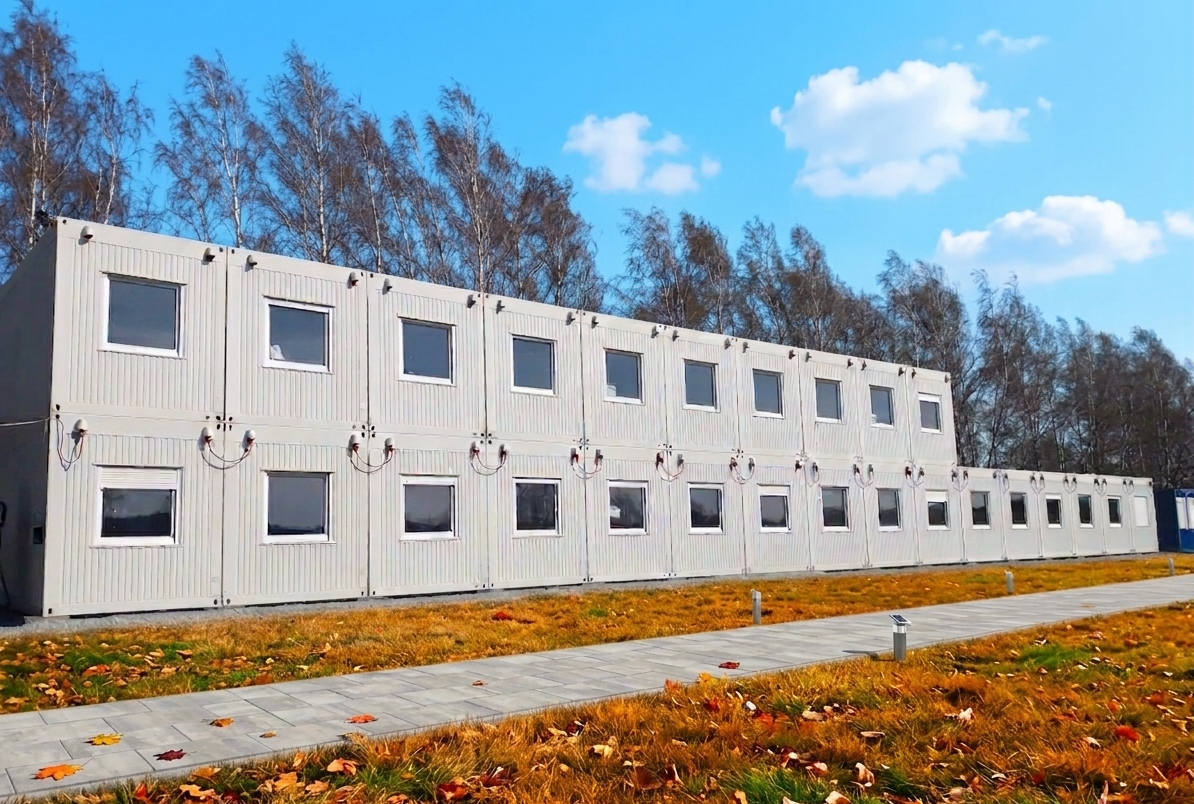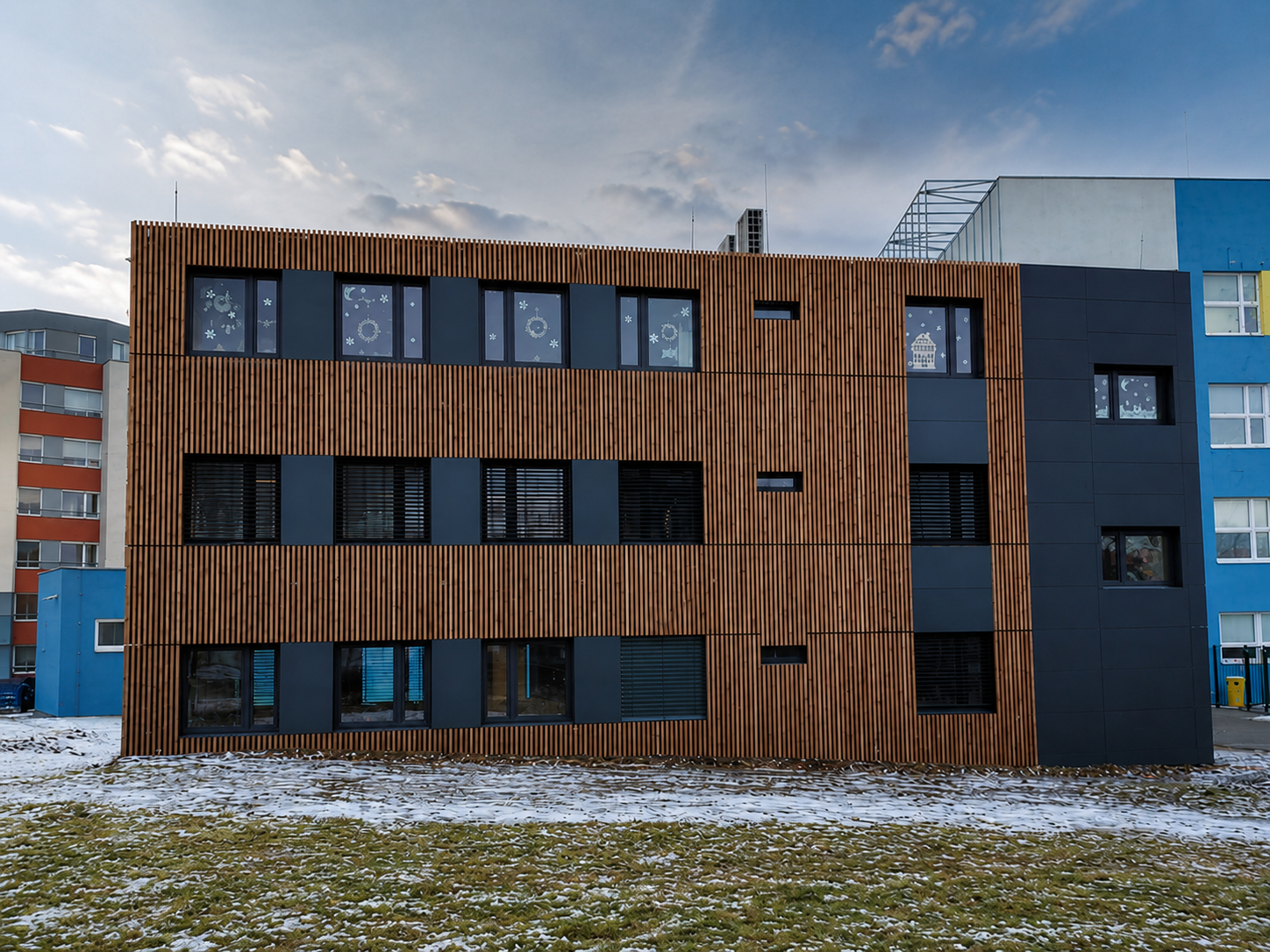
Modular construction is now a standard part of modern architecture. As requirements continue to grow for larger office buildings, schools, accommodation facilities, and multi-storey modular buildings, the demands placed on the fire safety of structures are increasing as well.
And this is exactly where a field begins that not every modular building manufacturer can handle.
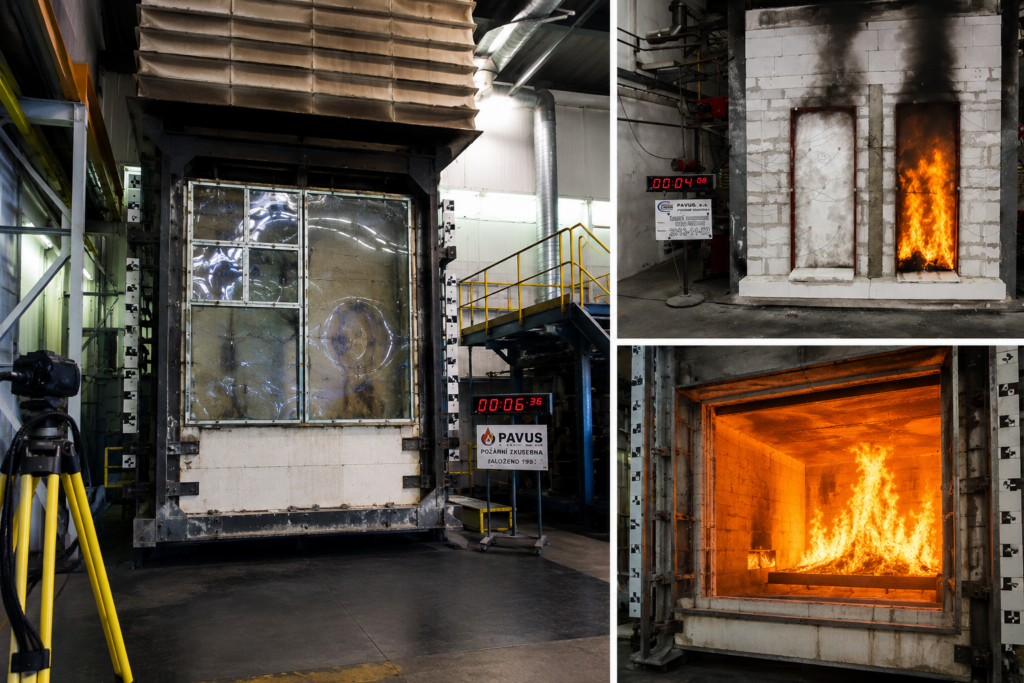
At WAREX, we have been developing and testing modular structures for fire-resistant applications over the long term. Our constructions have undergone testing in the accredited PAVUS laboratory and have obtained fire resistance classifications for walls, ceilings, and roofs of modular containers.
Where is fire resistance important?
Fire resistance plays a crucial role especially in:
- multi-storey modular buildings,
- office and administrative buildings,
- schools and kindergartens,
- accommodation facilities,
- healthcare buildings,
- technical and industrial structures.
For some buildings, fire resistance is a direct requirement of the project documentation or the fire safety design of the building. This is typically the case for buildings with three or more above-ground floors, where legislation and safety standards impose significantly stricter requirements on the structure.
Non-combustible insulation alone is not enough
The fire resistance of a modular building is not determined solely by the use of insulation or individual non-combustible materials. The overall structural composition and the behaviour of the construction as a functional system are what matter most.
During classification, the following are assessed, for example:
- load-bearing structures,
- wall compositions,
- ceiling and floor assemblies,
- cladding systems used,
- the method of assembling the individual construction layers.
WAREX modules were tested in the accredited PAVUS laboratory in accordance with the relevant European fire resistance standards.
Tested at PAVUS
WAREX structures were classified according to the European standard ČSN EN 13501-2 and tested in the accredited PAVUS fire testing laboratory.
For example:
- load-bearing module walls achieve classifications up to REI 60,
- ceiling and floor assemblies were classified with fire resistance ratings REI 60 / RE 60,
- roof structures of the modules were also tested.
This means that, for a defined period of time, the structure maintains:
- load-bearing capacity,
- structural integrity,
- and thermal insulation performance during fire exposure.
Modular construction without compromise
Modern modular buildings are no longer just a fast solution. Increasingly, they are fully functional buildings designed for long-term operation and demanding technical requirements.
The ability to design and deliver modular systems in fire-resistant configurations is therefore one of the key specialisations that determines the possible use of the entire building.
At WAREX, we consider fire safety an essential part of high-quality structural design — starting from the very first module concept.